Cesspool & septic services
Pumping is often one part of keeping a system healthy. These services cover the rest.
JET Cesspool Service pumps out cesspools and septic tanks for homes and businesses across Long Island. Book a routine pump-out before problems start, or call 24/7 when a full system is backing up.
Call if you notice any of these, if the system is overdue, or if more people are using it than usual.
When sinks, tubs and toilets all drain slowly at the same time, the system itself is usually the problem, not a single clogged pipe.
Gurgling toilets and water coming back up into a tub or floor drain mean wastewater has nowhere to go.
A sewage smell in the yard or near the drains often means the cesspool or tank is full.
Soggy soil, standing water or unusually green grass above the cesspool or tank can mean it is overflowing.
If you can't remember the last pump-out, or you just bought the house, it's time to have the system checked and emptied.
Guests, a growing family or a rental unit add water the system has to handle, so it fills sooner than it used to.
Pumping empties the sludge and scum that settle in a cesspool or septic tank, so wastewater can flow and drain again. Every visit also includes a look at the system's condition, so you know where it stands.
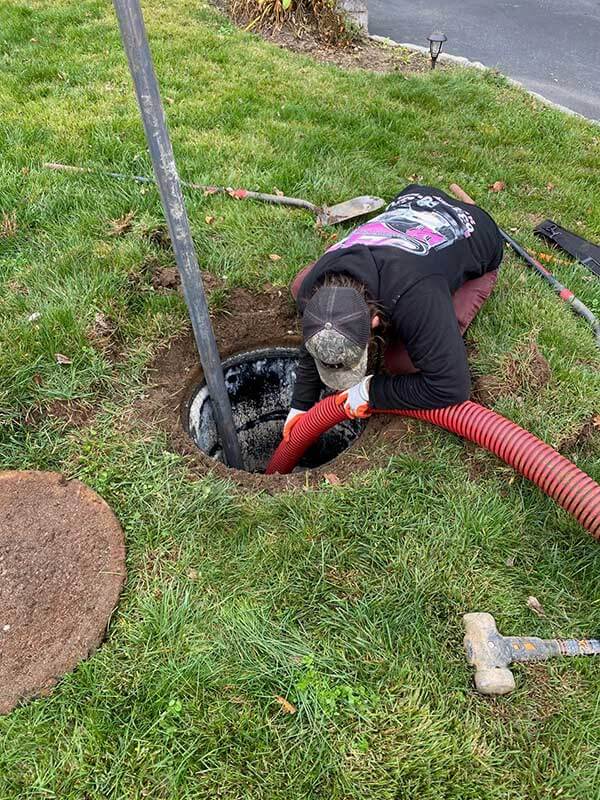
Long Island homes use two kinds of systems. A cesspool is a concrete ring with an open bottom and holes in its sides: liquid soaks out into the sand while solids settle inside. A septic tank is a watertight tank that holds the solids and sends the liquid on to one or more leaching pools.
JET pumps both. With a cesspool, pumping removes the sludge on the bottom and the waste in the pool. With a septic system, we empty the tank and check the leaching pools behind it, pumping them too when they are holding water. Not sure which one you have? Our guide to cesspools vs. septic tanks explains the difference, and the technician can tell you on the first visit.
Most residential pump-outs are done in a single visit. See how long it takes to pump a septic tank for what affects the timing.
There’s no single schedule. How often a system needs pumping depends on how many people live in the house, the size of the cesspool or tank, how much water goes down the drains, and how high the groundwater sits around it. The U.S. EPA says a typical household septic tank should be pumped every three to five years. Cesspools on Long Island often need it sooner; every two to three years is common.
If the system fills faster than it used to, pump it sooner, and ask about cesspool cleaning, which removes the hardened buildup that pumping leaves behind. For more detail, see our guides on pumping frequency and septic tank sizes.
Pumping solves a full system. It won’t fix everything:
If sewage is backing up right now, call (631) 260-3640 for 24/7 emergency pumping.
Restaurants, offices, schools, houses of worship and multi-family buildings fill their systems faster than a single home. JET sets up scheduled pump-outs that work around your hours, and our high-capacity trucks handle larger systems in one visit. Kitchens also need regular grease trap cleaning. See commercial cesspool services for more.
Some owners add a bacteria treatment to their routine. Ask the technician whether it makes sense for your system.
Need help right now?
Backups, odors, wet spots, clogged drains, and main line problems should not wait. JET responds 24/7 across Long Island.
Call 24/7: (631) 260-3640All services are available for both residential and commercial properties.
Pumping is often one part of keeping a system healthy. These services cover the rest.
JET also handles the lines between the house and the system:
115+Google reviews
4.7 average rating. Customers mention fair pricing, polite staff, and a professional team most often.
Read reviews on Google"We needed our cesspool emptied asap due to an overfill and Jack got here within the hour and did an awesome job and was very professional."
Lucas T., Google review
"…although they had to dig up the lawn to get to the cap, they did quite a neat job putting the pieces back like a jigsaw puzzle."
Andrew B., Google review
"…gave me all the details & pricing before dispatching the guys out to my house. Nothing was hidden."
Derick P., Google review
Don't see your question? Call (631) 260-3640.
It depends on household size, the size of the system and how much water you use. The EPA's guideline for a typical septic tank is every three to five years; Long Island cesspools often need it every two to three years. If yours fills faster than that, call so the cause can be checked.
The process is similar: the system is opened, emptied by a vacuum truck and checked. With a septic system we empty the tank and check the leaching pools behind it, pumping them too when they are holding water.
Most residential pump-outs are done in one visit. Time depends on the size of the system, how much buildup there is and how easy the cover is to reach.
Only if the cover is buried. JET locates it first, digs only as much as needed to open it, and puts the area back when the job is done.
Keep water use to a minimum while the truck is working. Once the pump-out is finished you can use water normally.
If the backup is caused by a full system, pumping relieves it right away. If a clogged line, broken pipe or failed system is involved, more work may be needed, and the technician will tell you before anything else is done.
Yes. JET answers 24/7, including weekends and holidays. For a backup or overflow happening now, call (631) 260-3640 instead of using the form.
Overdue for a pump-out or dealing with a backup? Call JET Cesspool Service at (631) 260-3640, 24/7, for cesspool and septic tank pumping anywhere on Long Island.
(631) 260-3640For a backup or overflow happening now, call (631) 260-3640 instead.