Cesspool & septic services
Residential and commercial.
Aeration uses high-pressure air to loosen the packed soil and settled sludge that keep a cesspool from draining. JET Cesspool Service provides cesspool and septic aeration for Long Island homes and businesses, with 24/7 help for urgent problems.
Aeration is aimed at pools that are structurally sound but no longer drain the way they should.
A pool that takes longer and longer to go down between uses may be surrounded by soil that has sealed up.
Needing service more often than you used to is a common sign the pool isn't soaking water into the ground.
When the level sits near the inlet even with light use, water isn't leaving through the bottom and sides.
Solids that have settled for a long time can block the sand that's supposed to take in liquid.
If the rings and dome are in good shape, aeration is one way to try to restore drainage before considering replacement.
Aeration, as JET does it, means driving high-pressure air into and around a cesspool through aeration rods. It's a way to restore drainage in a pool that is still sound.
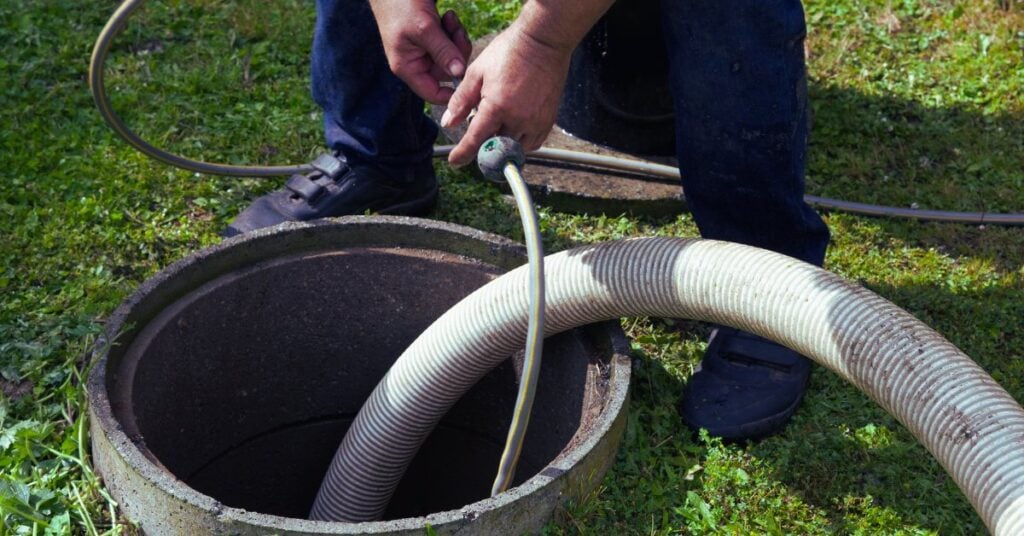
A cesspool works by letting liquid soak out through its open bottom and side holes into the sand around it. Over time, fine solids and biological slime can clog that sand, and the pool drains slower and slower.
Aeration pushes high-pressure air through rods into the bottom of the pool and the soil around it. JET’s technicians compare it to poking holes in the bottom of a foam cup full of water: once new paths open up, the liquid can drain on its own again.
The air also stirs up sludge that has settled on the bottom of the pool, often over years without service. Once that layer is loosened, a treatment can go to work on it, helping the bottom of the cesspool return to draining through sand.
That’s why aeration is usually paired with pumping and a treatment rather than done on its own.
Aeration can’t hold up a cracked dome, replace a collapsed ring or fix a broken pipe; those are jobs for cesspool and septic repair. It also isn’t the first step when sewage is coming into the house, which calls for emergency septic pumping.
Results depend on the pool and the soil around it. If the ground is saturated or the pool has failed, aeration may not bring it back, and JET will say so up front.
JET aerates cesspools that work on their own as well as cesspools and leaching pools that take the overflow from a septic tank. In a tank-and-pool system, the tank catches solids first, so the pool behind it is the part that usually needs aeration.
Cesspool aeration is a service performed on an existing pool. It isn’t the same as an I/A (innovative/alternative) nitrogen-reducing system, which Suffolk County has required for new or expanded single-family homes since July 1, 2021; some of those systems use air as part of their treatment process. If you’re replacing a system, see cesspool and septic installation.
Need help right now?
Backups, odors, wet spots, clogged drains, and main line problems should not wait. JET responds 24/7 across Long Island.
Call 24/7: (631) 260-3640Aeration is one tool among several for a slow cesspool.
Residential and commercial.
115+Google reviews
4.7 average rating. Customers mention fair pricing, polite staff, and a professional team most often.
Read reviews on Google"We needed our cesspool emptied asap due to an overfill and Jack got here within the hour and did an awesome job and was very professional."
Lucas T., Google review
"…gave me all the details & pricing before dispatching the guys out to my house. Nothing was hidden."
Derick P., Google review
"…although they had to dig up the lawn to get to the cap, they did quite a neat job putting the pieces back like a jigsaw puzzle."
Andrew B., Google review
Don't see your question? Call (631) 260-3640.
No. Pumping removes what's in the pool. Aeration works on the bottom and the surrounding soil so the pool can drain. On most visits the pool is pumped first and then aerated.
No. It's meant for sound pools that drain poorly. A full pool may only need pumping, and a damaged one needs repair.
It can restore drainage, but how long that lasts depends on the pool, the soil and how the system is used. Routine pumping helps the results last.
It isn't the first step when sewage is in the house. Call for emergency service; once the backup is handled, the system can be evaluated for aeration.
Yes. JET aerates stand-alone cesspools and the leaching pools that sit behind a septic tank.
Call JET Cesspool Service at (631) 260-3640 to talk through a slow-draining cesspool. We'll check whether aeration, pumping or another service fits, anywhere on Long Island, 24/7 for emergencies.
(631) 260-3640For a backup or overflow happening now, call (631) 260-3640 instead.