
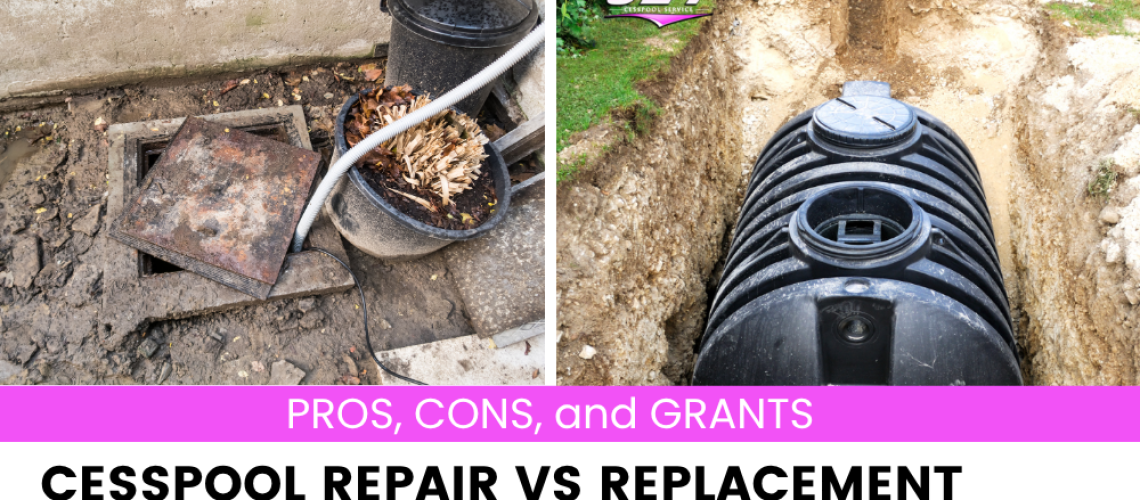
When a cesspool starts causing problems, Long Island homeowners often face an important question: Should the cesspool be repaired, or does it need to be replaced?
The answer depends on the condition of the existing system, the type and extent of the damage, how well the system is functioning, and current local requirements. While some cesspool problems can be corrected with professional repairs, a system with significant deterioration or repeated failures may need to be replaced.
Knowing the difference between cesspool repair and replacement can help homeowners make a more informed decision and avoid investing in a solution that won’t address the underlying problem.
What Is Cesspool Repair?
Cesspool repair involves correcting a specific problem with an existing wastewater system without completely replacing the system.
The type of repair depends on what’s wrong. A professional may identify a damaged component, deteriorated connection, piping issue, or another problem that can be corrected while keeping the existing system in place.
The key question is whether the existing cesspool remains a viable system.
If the underlying system is structurally sound and the problem is localized, repairing it may be a practical option. However, if the system has widespread deterioration or has repeatedly failed, continuing to repair it may only provide a temporary solution.
When Can a Cesspool Be Repaired?
Not every failing cesspool requires immediate replacement. Repair may be appropriate when the problem is limited and the existing system can still function effectively after the necessary work is completed.
Minor or Localized Damage
If a problem is limited to a particular component or area of the system, repair may be possible without replacing the entire cesspool.
A professional inspection can help determine whether the damage is isolated or part of a larger system failure.
Damaged Components or Connections
Certain components, connections, or piping associated with a wastewater system may be repairable. Addressing these problems can potentially restore proper operation without undertaking a complete replacement.
The feasibility of repair depends on the condition and design of the existing system.
The Existing System Is Still Viable
The most important consideration is whether the cesspool can continue functioning properly after the repair.
If the system is otherwise in reasonable condition and the problem can be corrected reliably, repairing it may make more sense than replacing the entire system.
A professional evaluation is the best way to determine whether repair is a realistic long-term option.
When Does a Cesspool Need to Be Replaced?
Replacement becomes more appropriate when the existing cesspool has significant problems that cannot reasonably be corrected through repair.
Some common warning signs include repeated system failures, wastewater surfacing, significant structural deterioration, and an inability to properly accept wastewater.
Repeated System Failure
If your cesspool continues to fail after repairs, the problem may be larger than an individual damaged component.
Repeated failures can indicate that the system itself has reached the end of its useful life. In these circumstances, replacement may provide a more dependable long-term solution than continuing to invest in temporary repairs.
Major Structural Damage
A cesspool with extensive structural deterioration may not be a good candidate for repair.
When damage affects the overall integrity of the system, replacing it may be more practical and reliable than attempting multiple repairs.
The System Can No Longer Properly Handle Wastewater
A wastewater system needs to accept and properly manage the wastewater generated by the property.
If the existing system can no longer perform this function effectively, a more comprehensive replacement may be necessary.
This is especially important when homeowners experience recurring wastewater surfacing or other indications of system failure.
The Existing System Doesn’t Meet Current Requirements
Long Island homeowners also need to consider current county and local regulations when evaluating a replacement.
In Suffolk County, homeowners generally cannot replace an existing cesspool with another new cesspool. Depending on the property and circumstances, a replacement may require a compliant septic system or nitrogen-reducing wastewater treatment system.
Nassau County also has programs supporting the replacement of conventional cesspool and septic systems with nitrogen-reducing systems for qualifying properties.
Because requirements can vary based on the property’s location and circumstances, homeowners should have a qualified professional evaluate the available options before beginning a replacement project.
Replacement May Also Qualify for Financial Assistance
The cost of replacing a wastewater system can be a major concern for homeowners. However, eligible Long Island homeowners may have access to financial assistance for certain replacement projects.
Suffolk County and New York State have programs designed to help eligible homeowners replace conventional cesspool and septic systems with qualifying nitrogen-reducing wastewater treatment systems.
Current Suffolk County information includes a County Septic Improvement Grant of up to $20,000. A New York State septic replacement program can provide up to 75% of eligible costs, with a maximum of $25,000. Suffolk County has also announced a streamlined process that can potentially provide combined funding of up to $45,000 for eligible homeowners.
Grant programs have specific requirements, and funding and eligibility can change. Homeowners should confirm the current program requirements before making plans for a replacement.
Cesspool Repair vs. Replacement: Which Is Right for You?
There isn’t a one-size-fits-all answer.
| Cesspool Repair | Cesspool Replacement |
| Addresses a specific problem | Replaces the existing system |
| Existing system remains in place | Existing system is removed or abandoned as required |
| Appropriate when the system remains viable | Considered when the system has reached failure or cannot reasonably be repaired |
| Usually involves a more limited scope of work | Generally a larger project |
| Can extend the useful life of a functioning system | Provides a new wastewater system designed to meet current requirements |
The most important factor is the condition and performance of the existing system. A repair may be the right choice when the problem is limited and the system remains viable. Replacement may be appropriate when the system has significant deterioration or continues to fail.
Professional Cesspool Repair and Replacement in Long Island
Choosing between repair and replacement is a decision that should be based on the actual condition of your cesspool.
Jet Cesspool Service provides professional cesspool repair, replacement, and septic system installation services for residential and commercial customers throughout Long Island.
Our team can evaluate the situation and help determine the appropriate approach for your existing wastewater system. When repair is a viable option, the goal is to address the problem without unnecessary replacement. When replacement is necessary, proper installation and compliance with applicable local requirements are essential.
With local experience serving Long Island homeowners, Jet Cesspool Service can help you understand your options and move forward with the appropriate solution.
FAQs
Can an old cesspool be replaced with a new cesspool on Long Island?
Requirements vary by location. In Suffolk County, replacing an existing cesspool with another new cesspool is generally not permitted. Depending on the property, a compliant septic or nitrogen-reducing wastewater treatment system may be required.
Is cesspool repair cheaper than replacement?
Generally, a repair requires less work than a complete replacement and may have a lower upfront cost. However, repeated repairs can become expensive if the underlying system is failing. The long-term condition of the system should be considered rather than looking only at the initial price.
Are there grants for replacing a cesspool in Long Island?
Some homeowners may qualify for county or New York State funding for qualifying wastewater system replacements. Eligibility, funding amounts, and program requirements vary, so homeowners should verify current information before beginning a project.